
What Is Vegetable Drying? A Guide to Drying Green Vegetables
Overview
Fresh green vegetables are one of the hardest foods to preserve well. They contain a lot of moisture, bruise easily, and lose color fast once processing conditions slip. That is why green vegetable drying matters: it turns a highly perishable crop into a stable ingredient with a longer shelf life and broader commercial use.
Green vegetable drying is the controlled removal of moisture from vegetables such as spinach, kale, moringa, celery leaves, and similar leafy materials so spoilage slows and storage becomes practical. In a proper vegetable drying process, the goal is not simply to make the product dry. The goal is to preserve usability, color, safety, and rehydration quality while reducing moisture enough to limit microbial growth.

What Green Vegetable Drying Actually Means
Green vegetable drying is the preservation of leafy or green vegetables by removing enough water to make the product more shelf-stable. Michigan State University Extension defines dehydrating as removing enough moisture from food so spoilage microorganisms cannot grow, while FAO describes drying as a preservation method that depends on moisture removal and the right drying conditions.
That definition matters because drying is often misunderstood as a single action. In practice, it is a process system made up of raw material selection, pretreatment, moisture removal, and storage control. If one part fails, the final product can still lose quality even if it looks dry.
Why green vegetables are more difficult to dry than many other foods
Green vegetables are delicate. Their tissues are thin, their natural pigments are sensitive, and their surface area is high. That means drying conditions can quickly affect chlorophyll, texture, aroma, and vitamin retention.
Leafy materials also tend to shrink sharply and dry unevenly if preparation is poor. A thick stem section and a thin leaf section do not release water at the same speed. That is one reason consistent cutting and proper loading are basic quality controls in the vegetable drying process. This is an inference drawn from extension drying guidance and method descriptions.
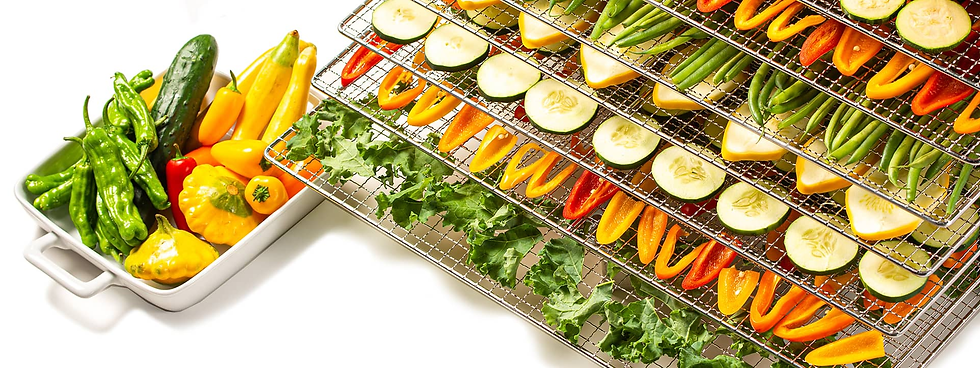
Why Drying Green Vegetables Matters
The main benefit of drying green vegetables is longer storage life, but that is not the only reason producers use it. Drying reduces bulk, lowers transport weight, expands off-season availability, and creates powders, flakes, and ingredients for soups, snacks, seasonings, instant foods, and functional blends. FAO also notes that drying helps preserve food for periods when fresh produce is not available.
For businesses, drying also creates flexibility in procurement and inventory. When fresh supply is seasonal but demand is year-round, dehydration provides a way to stabilize production. For households and small farms, it reduces waste from surplus harvests.
The real commercial value is not just preservation
A dried green vegetable is not only a stored vegetable. It can become:
a rehydratable ingredient
a powder for blending
a concentrated flavor or color component
a low-moisture raw material for packaged foods
FAO’s dried vegetable guidance highlights low moisture, good rehydration, and the absence of defects as hallmarks of a quality dehydrated product. That is important because the market does not reward dryness alone. It rewards a product that still performs well in use.
The Green Vegetable Drying Process: Step by Step
If you want a clear view of the green vegetable drying process, it helps to think in stages rather than machines. Equipment matters, but process logic matters more.
1. Raw material selection
Start with sound, fresh vegetables. Extension and training materials consistently stress that the foundation of good dried produce is good raw material. Damaged, overly mature, or decayed leaves will not improve during drying.
For green vegetables, this means selecting leaves with strong color, minimal mechanical damage, and low field contamination. If the raw material is already yellowing or bruised, drying will often make those defects more visible rather than less visible.
2. Washing and sorting
Washing removes soil, debris, and surface contamination. Sorting removes defective leaves and improves batch consistency. These steps are basic, but they strongly affect final cleanliness and visual quality.
3. Cutting or size reduction
Uniform pieces dry more evenly. Whole leaves can be dried, but processors often reduce size depending on the intended format: flakes, strips, or powder feedstock. This is especially important when stems and leaf tissue differ in thickness. This point is inferred from general drying mechanics and preparation guidance.
4. Blanching or pretreatment
Blanching is one of the most important pretreatments for many vegetables. Arizona Extension and other guidance describe blanching as a standard preparation step before drying vegetables, while field manuals for leafy vegetables specify short blanching times to avoid overcooking.
Blanching can help:
reduce enzyme activity
support color retention
improve drying consistency
lower some microbial risk before drying
It also has trade-offs. Excess blanching can soften tissue too much, alter flavor, and increase nutrient losses. That is why blanching has to be matched to the vegetable type and product goal.
5. Moisture removal
This is the core drying stage. Water is removed by sun, solar heat, hot air, vacuum-related systems, freeze-drying, microwave assistance, or other controlled methods. FAO’s technical guidance notes that drying rate is affected by air movement, dryness of air, temperature, and other variables.
6. Final dryness check
A product is not finished because it feels dry on the surface. Quality dried vegetables are typically expected to have low moisture content and acceptable rehydration properties. FAO describes high-quality dehydrated vegetables as having around 5% moisture and satisfactory rehydration, though actual commercial targets vary by product and specification.
7. Packaging and storage
This is where many processors lose value. Dehydrated vegetables are hygroscopic, meaning they absorb moisture from the environment. Packaging and storage temperature can strongly affect chlorophyll retention, browning, vitamin stability, and shelf life.
Main Vegetable Drying Methods
The phrase vegetable drying methods covers a wide range of technologies. The best one depends on the balance you need between cost, throughput, appearance, nutrient retention, and process control.

Comparison table: common drying methods for green vegetables
Method | Best for | Main Strength | Main Limitation |
Sun drying | Very low-cost traditional use | Minimal equipment | Lower hygiene control, weather dependence, slower drying |
Solar drying | Small-scale improved processing | Better protection than open sun drying | Still climate-dependent |
Hot-air drying | Commercial and industrial use | Widely used, scalable, controllable | Heat can affect color and nutrients |
Freeze drying | Premium products | Strong shape, color, and nutrient retention | High capital and operating cost |
Microwave-assisted drying | Faster moisture removal or hybrid systems | Reduced drying time | Process complexity and uneven heating risk |
Vacuum drying | Heat-sensitive products | Lower-temperature drying support | Higher equipment cost |
This comparison is based on FAO process guidance, extension drying resources, and published studies comparing drying methods for green vegetables.
Sun drying
Sun drying is the oldest and simplest method. EPA notes that dehydration of fruits and vegetables has historically included both sun drying and artificial dehydration. FAO also describes basic sun-drying methods for preserving household fruit and vegetables.
For green vegetables, open sun drying is attractive because it is low-cost. Its weakness is quality control. Product hygiene, weather variability, dust exposure, uneven drying, and weaker color retention all make it less suitable for consistent premium output.
Solar drying
Solar dryers improve on open sun drying by creating a more protected and often more efficient drying environment. FAO notes that improved drying technologies such as solar dryers can retain more vitamins than traditional sun drying.
That makes solar drying a practical middle ground. It is especially relevant for small processors who need better quality than open-air drying but cannot justify advanced industrial equipment.
Hot-air drying
Hot-air drying is one of the most common commercial drying methods. It offers repeatability, scalable throughput, and better process control than traditional methods. For green vegetables, it is often the baseline against which newer methods are compared.
Its challenge is quality retention. If drying is too slow or temperature is poorly chosen, color and sensitive nutrients can decline. Research on green leaves has shown that drying conditions influence chlorophyll, browning, and vitamin retention.
Freeze drying
Freeze drying is often chosen when premium quality is the goal. It tends to preserve structure, color, and some heat-sensitive qualities better than conventional hot-air approaches, but it comes with a much higher cost structure. This is a general industry inference based on lower-temperature drying principles and its premium commercial positioning; readers should verify exact performance claims by product and system.
Microwave-assisted and hybrid drying
Published studies on green vegetable powders show that microwave and foam-mat or hybrid approaches can affect color retention and drying efficiency differently from standard hot-air methods. These systems are attractive when processors want shorter drying times or different functional outcomes, but they require tighter process tuning.
What Happens to Color, Nutrients, and Texture During Drying
When people ask about the benefits of drying green vegetables, they often focus on shelf life. The more strategic question is what you gain and what you lose.
Color retention
Green vegetables are judged visually. A dull olive or brown-green product looks old even if it is safe. FAO identifies pigment oxidation and non-enzymatic browning as major deterioration factors in dehydrated vegetables. Research on leafy greens also reports better retention of chlorophyll and color under better-optimized drying and storage conditions.
Nutrient retention
Drying preserves food by making it more stable, but it does not preserve every nutrient equally. FAO and published studies note that vitamins such as vitamin C and some pigments are vulnerable to oxidation and heat-related losses.
That does not make drying a poor choice. It means the quality of the drying method matters. Faster or better-controlled drying can sometimes protect quality better than slow, poorly controlled drying.
Texture and rehydration
A useful dried vegetable should rehydrate reasonably well if the intended application calls for it. FAO explicitly includes fast and satisfactory rehydration among the characteristics of high-quality dehydrated vegetables.
For powder products, rehydration may matter less than dispersibility, color, and flavor. That is why processors should define the end use before choosing a method.
How to Dry Green Vegetables Properly
If your question is how to dry green vegetables, the answer is not “pick a machine and start.” Good results come from controlling a sequence.
A practical process framework
Choose sound raw material with strong color and low damage.
Wash and sort thoroughly to remove dirt and defective material.
Cut uniformly if your product form requires it.
Use blanching when suitable for the vegetable and product goal.
Dry under controlled conditions appropriate to the chosen method.
Check final dryness and functionality, not just surface feel.
Package quickly in moisture-protective materials and store away from humidity, heat, and light.
Common mistakes
The most common failures in drying green vegetables are:
drying too slowly
overloading trays
using inconsistent cut size
over-blanching
packaging before the product stabilizes
storing dried vegetables in moisture-permeable packaging
Those errors all reduce quality, even when the product seems usable. This list is synthesized from extension guidance, FAO deterioration factors, and storage findings.
Choosing the Right Drying Method for Your Goal
The right method depends on what you are trying to sell or use.
If your priority is low cost
Choose sun drying or solar drying, but accept trade-offs in consistency and environmental control. Solar drying is usually the better option when product quality matters.
If your priority is scalable production
Choose hot-air drying. It is the most practical commercial baseline because it balances throughput, control, and equipment familiarity.
If your priority is premium quality
Consider freeze drying or specialized hybrid systems, especially for powders, premium ingredients, or export-oriented products. This recommendation is an inference based on the method’s lower-temperature advantages and common commercial use in premium dried foods.
If your priority is ingredient performance
Define the product first. A soup ingredient, a smoothie powder, and a seasoning flake do not need the same drying profile. That is a strategic distinction many generic articles miss.
Conclusion
Green vegetable drying is best understood as a quality-preservation process, not a simple moisture-removal task. The strongest results come when you treat raw material choice, pretreatment, drying conditions, and packaging as one connected system. That is what separates a dull, fragile dried leaf from a stable ingredient with real commercial value.
If you are building or refining a drying program, start with one question: what should the dried vegetable do after drying? Once you define the end use, you can choose the drying method, pretreatment, and storage approach that actually fit the product.
FAQ Section
What is green vegetable drying?
Green vegetable drying is the controlled removal of moisture from leafy or green vegetables to slow spoilage and extend shelf life. It is used to create stable dried leaves, flakes, or powders while aiming to preserve color, usability, and storage performance.
What are the methods of drying green vegetables?
The main methods of drying green vegetables are sun drying, solar drying, hot-air drying, freeze drying, and microwave-assisted or hybrid drying. Each method differs in cost, speed, hygiene control, and its effect on color, nutrient retention, and consistency.
Why is blanching used before drying vegetables?
Blanching is used to reduce enzyme activity and help protect quality before drying. It can improve color retention and process consistency, but it must be controlled carefully because too much blanching can damage texture and increase nutrient losses.
What are the benefits of drying green vegetables?
Drying green vegetables extends shelf life, reduces waste, lowers storage and transport burden, and creates flexible ingredient formats. It also helps make seasonal vegetables available for later use in powders, soups, blends, and processed foods.
Does drying reduce nutrients in green vegetables?
Yes, some nutrients can decline during drying, especially heat- and oxidation-sensitive compounds such as vitamin C and pigments. The extent of loss depends heavily on the drying method, temperature, speed, and storage conditions after drying.
How should dried green vegetables be stored?
Dried green vegetables should be stored in moisture-protective packaging and kept away from humidity, heat, and light. This matters because dehydrated vegetables are hygroscopic and can reabsorb moisture, which lowers quality and storage stability.
Which drying method is best for green vegetables?
There is no single best drying method for all green vegetables. Solar drying may suit small processors, hot-air drying may suit commercial production, and freeze drying may suit premium products where quality retention outweighs cost.


Comments