
Dried Onion Flakes Substitute: Best Options and Ratios
Direct answer: The best dried onion flakes substitute depends on the application. Onion powder works when you need flavor without visible pieces, dried minced onion works when texture matters, and fresh onion can work in wet recipes if extra moisture is acceptable. For food manufacturing, the closest substitute is usually another controlled dehydrated white onion form with a similar particle size and flavor profile.
Key Takeaways
Use onion powder when flavor dispersion matters more than visible onion pieces.
Use dried minced onion or granules when you need texture closer to onion flakes.
Use fresh onion only when the recipe or production process can handle extra moisture and shorter storage life.
For industrial production, test substitutes in the real formula before changing a specification.
Bulk buyers should define particle size, moisture, flavor strength, packaging, and documentation before requesting quotes.
What Is the Closest Substitute for Dried Onion Flakes?
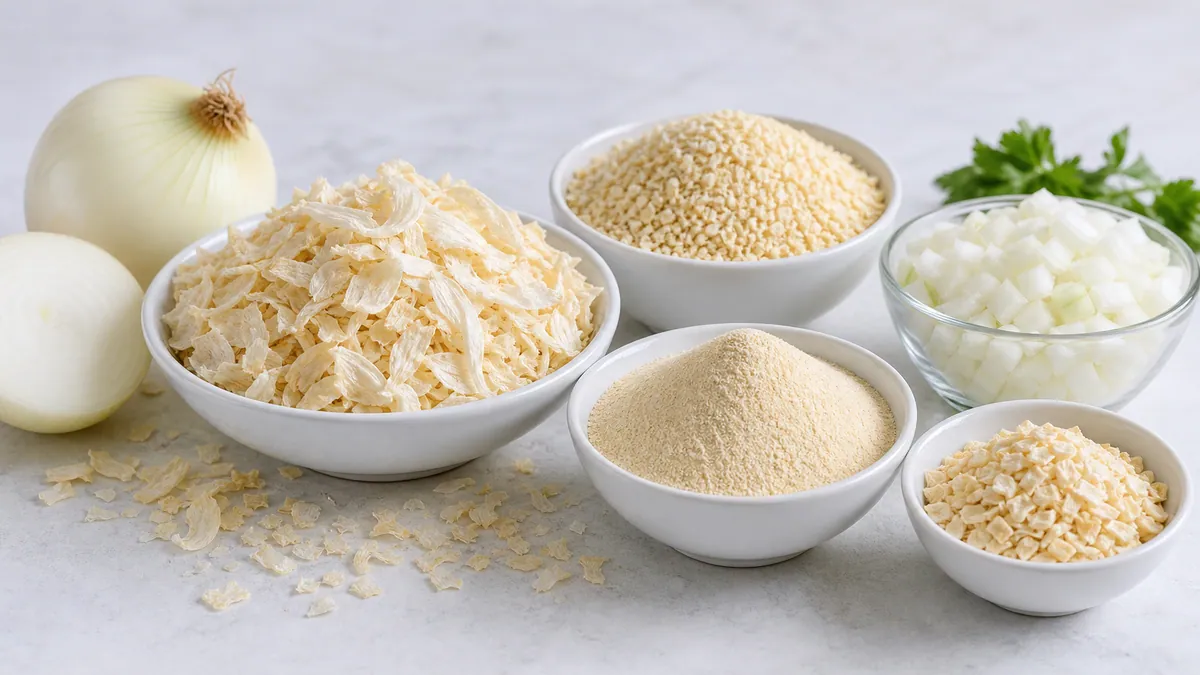
The closest substitute for dried onion flakes is usually dried minced onion or dehydrated onion granules because they keep the dry ingredient format and provide some visible onion texture. Onion powder is a good substitute when the finished product needs onion flavor but not onion pieces. Fresh onion can be used in cooking, but it changes moisture, texture, storage stability, and preparation requirements.
For home cooking, these differences may be easy to adjust. In food manufacturing, they are more important. A seasoning blend, dry soup mix, instant noodle cup, snack coating, or ready-meal component may require a specific particle size so the ingredient distributes evenly and looks consistent after processing. That is why industrial buyers should treat substitution as a formulation decision, not only a kitchen shortcut.
Dried Onion Flakes vs Onion Powder
Onion powder is the most common substitute when the goal is flavor. It disperses quickly in dry mixes, sauces, soup bases, marinades, and seasoning systems. The tradeoff is that powder does not provide the visual identity or texture of onion flakes. It can also affect flow behavior, dusting, and blend uniformity if the formula was originally designed for larger particles.
A practical starting point is to use less onion powder than onion flakes because powder is finer and distributes more completely. Exact conversion depends on flavor strength, particle size, and the formula. Food manufacturers should run a bench test and then a production-line trial before replacing flakes with powder in a commercial specification.
Dried Onion Flakes vs Dried Minced Onion
Dried minced onion is often a better texture substitute than powder. It keeps a dry format, contributes visible pieces, and can be easier to use in products where onion should be seen after rehydration. The main difference is particle size. Minced onion is typically smaller and may distribute differently in a blend or rehydrate faster than larger flakes.
This substitute is useful for soups, stuffing mixes, noodle cups, sauces with visible inclusions, and ready meals. If the finished product needs a clear onion piece, dried minced onion may be a better match than powder. If the product needs smooth flavor only, powder may be more practical.
Can Fresh Onion Replace Dried Onion Flakes?
Fresh onion can replace dried onion flakes in some cooked recipes, but it is not a one-for-one substitute in dry food production. Fresh onion adds water, changes texture, requires preparation, has a shorter storage life, and may affect cooking time. That makes it less practical for dry soup mixes, seasonings, snack coatings, and shelf-stable ingredient systems.
In industrial production, fresh onion may be suitable for chilled or cooked products where fresh texture is part of the formula. But when a buyer needs dry storage, stable handling, low moisture, and consistent dosing, dehydrated onion forms are usually more efficient. Fresh Time Foods focuses on dehydrated vegetable ingredients because they are practical for global B2B supply chains and repeatable production programs.
Quick Substitution Guide
Need visible onion pieces? Use dried minced onion, onion granules, or a smaller dehydrated onion cut.
Need smooth onion flavor? Use onion powder and test the usage level carefully.
Need a wet cooked recipe substitute? Fresh onion can work, but adjust for moisture.
Need dry mix stability? Stay with dehydrated onion forms instead of fresh onion.
Need consistent bulk sourcing? Specify cut size, moisture, flavor profile, and packaging before changing suppliers.
How Food Manufacturers Should Choose a Substitute
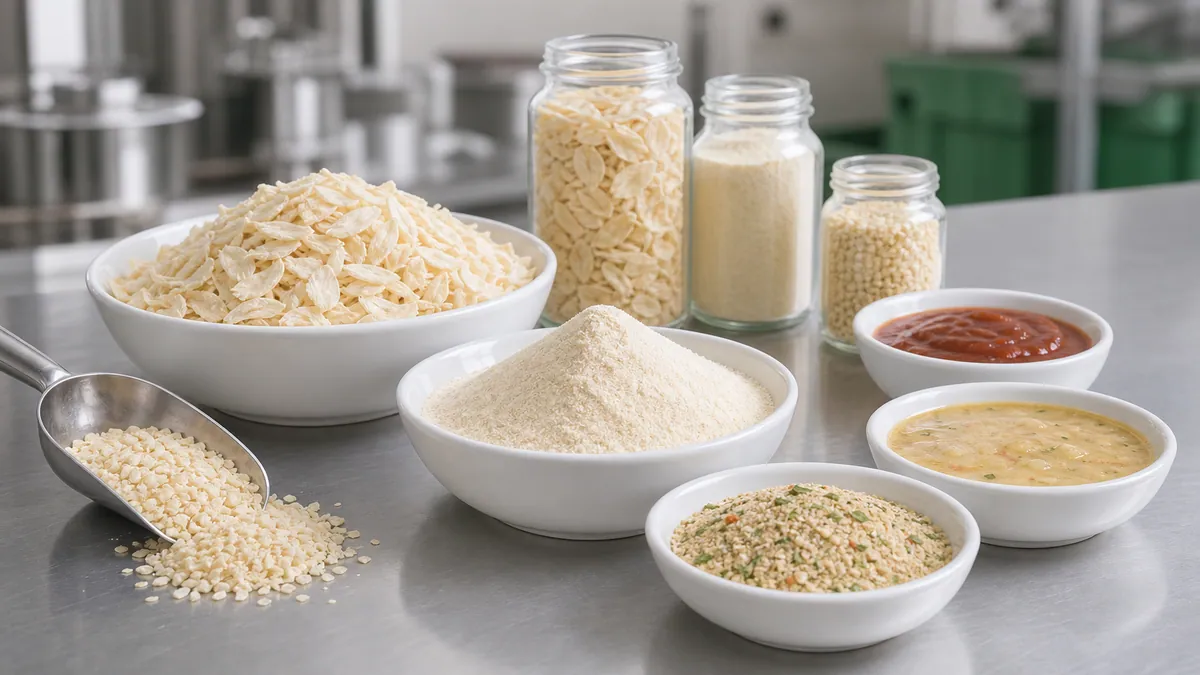
Food manufacturers should choose a dried onion flakes substitute by looking at application performance first. The right answer is different for a dry seasoning blend, a sauce base, a soup mix, a ready-meal filling, and a snack coating. The substitute should match the original ingredient’s role: flavor, visible identity, rehydration, texture, flow, or label-friendly ingredient recognition.
For example, a soup manufacturer may prefer flakes or minced onion because the buyer expects visible pieces after rehydration. A snack seasoning producer may prefer powder because even coating and flavor distribution are more important than visibility. A ready-meal producer may need granules that hold up during mixing, packing, and thermal processing.
Specification Questions Before Changing Ingredients
Before replacing onion flakes in a commercial product, purchasing and R&D teams should agree on the technical specification. This protects the formula and makes supplier quotations easier to compare. The most useful questions include:
What is the target finished application: soup, sauce, seasoning, snack, ready meal, or dry mix?
Does the product need visible onion pieces or only onion flavor?
What particle size, mesh, or cut size is acceptable?
What moisture range and packaging format are required?
Will the substitute affect flow, caking, rehydration, or appearance?
What documents are needed for import, customer approval, or private label programs?
Fresh Time Foods shares more about manufacturing and ingredient handling on its process page. Buyers comparing suppliers can also review our dehydrated onion supplier guide for more procurement-specific evaluation criteria.
Where Dried Onion Substitutes Work Best
Dried onion substitutes are widely used across food processing because they are easy to dose, store, and blend. Onion powder is common in snack seasonings, spice blends, marinades, sauces, meat alternatives, and soup bases. Dried minced onion and flakes are common in instant noodles, dry soup mixes, ready meals, stuffing mixes, and products where visual onion pieces add value.
The same logic applies to related dehydrated vegetables. Buyers may combine onion with dehydrated garlic, carrots, cabbage, spinach, bell pepper, or customized vegetable blends to build a more complete flavor and visual system for dry mixes or ready meals.
B2B Buying Tips for Dried Onion Ingredients
For procurement teams, the best substitute is not only the ingredient that tastes closest. It is the option that performs consistently across production batches, ships reliably, and meets documentation requirements. Buyers should request samples in the exact form they plan to use and test those samples in the real product before confirming a bulk order.
It is also useful to share the destination market and packaging expectations early. Buyers importing to Europe, the United States, Australia, Brazil, or other markets may need specific paperwork, labeling details, carton specifications, or customer approval documents. Clear requirements help avoid last-minute delays. For broader supplier evaluation, see Fresh Time Foods’ guide on sourcing dehydrated vegetables from China.
FAQ: Dried Onion Flakes Substitute
What can I use instead of dried onion flakes?
You can use dried minced onion, onion granules, onion powder, or fresh onion depending on the recipe. Dried minced onion is closest for texture, while onion powder is best for smooth flavor distribution.
Is onion powder stronger than dried onion flakes?
Onion powder often tastes more evenly distributed because it is finer. It may seem stronger in a formula, so buyers should test usage levels instead of replacing flakes at the same weight or volume without validation.
Can I use fresh onion instead of dried onion flakes?
Yes, in some cooked recipes, but fresh onion adds moisture and preparation work. It is usually not a practical substitute for dry mixes, shelf-stable seasonings, or bulk industrial ingredient systems.
What is the best substitute for dry soup mixes?
Dried minced onion, onion granules, or smaller dehydrated onion flakes are usually better than fresh onion for dry soup mixes because they keep the dry format and can rehydrate in the final application.
How should manufacturers test an onion substitute?
Manufacturers should test flavor, particle distribution, rehydration, appearance, flow, packaging behavior, and finished-product performance. The substitute should be tested in the real formula, not only tasted alone.
Does Fresh Time Foods supply dried onion flakes and related forms?
Fresh Time Foods supplies dehydrated onion ingredients and related dehydrated vegetable solutions for industrial and commercial buyers. For product options, visit the dehydrated white onions page or browse more articles on the Fresh Time Foods blog.
Request Dried Onion Ingredient Support
Procurement Note: Keep Substitution Controlled
For purchasing teams, a dried onion flakes substitute should be documented as a controlled specification change. Even when two ingredients look similar, a change in particle size, bulk density, moisture, or flavor intensity can affect filling weights, packaging behavior, rehydration, and final product appearance. The safest approach is to test the substitute in the finished application, update the ingredient specification, and confirm that quality, purchasing, and production teams all approve the change before scaling up.
If you are evaluating dried onion flakes, minced onion, onion powder, or customized dehydrated onion specifications for food manufacturing, distribution, OEM, or private label programs, contact Fresh Time Foods to discuss samples, packaging, documentation, and bulk export requirements.


Comments